A note before you read: Tinnitus is not Mr Veer's specialist clinical area — he is primarily a sleep surgeon and general ENT consultant. What he can offer is personal experience of severe tinnitus, careful reading of the evidence, and many years of clinical observation of patients who have been helped by the approach described here. If this page helps you make sense of your symptoms and find the right specialist, it will have served its purpose. Please do not wait for a referral to an ENT surgeon before starting — the most effective treatments are delivered by audiologists and psychologists, not surgeons.
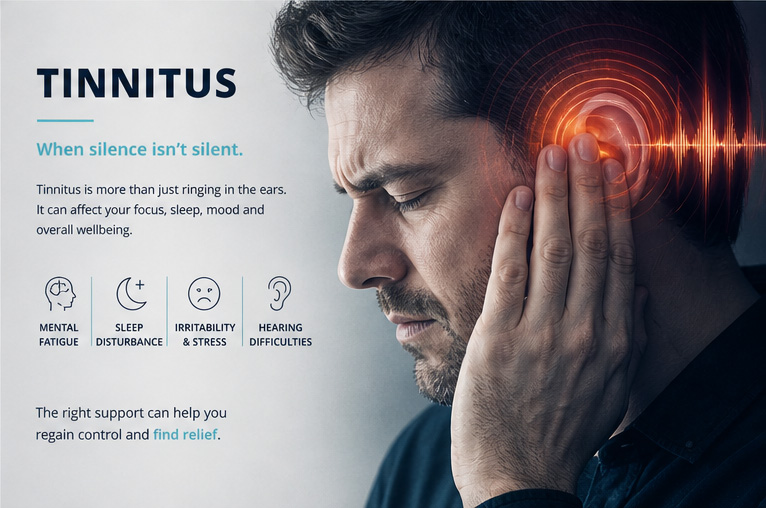
How Common Is Tinnitus?
Tinnitus is far more common than most people realise. A 2022 systematic review in JAMA Neurology, drawing on 113 studies, estimated that tinnitus affects more than 740 million adults globally, with over 120 million considering it a significant problem. The pooled prevalence among adults was 14.4%, rising to 23.6% in those aged 65 and over. Severe tinnitus — the kind that substantially impairs quality of life — affects around 2.3% of the adult population.
In Europe, approximately 65 million adults across the EU28 have tinnitus, of whom around 4 million have severe symptoms. In the United States, the condition affects approximately 27 million adults, with over 40% experiencing it constantly.
Depression is a particularly important comorbidity. A systematic review of 28 studies covering nearly 10,000 patients found a median depression prevalence of 33% among tinnitus sufferers. Tinnitus does not just affect hearing — it affects mood, sleep, concentration, and relationships in ways that compound each other.
On natural history: a large UK Biobank study of over 168,000 adults found that over four years, 18.3% of those who originally reported tinnitus had none at follow-up. Spontaneous complete resolution does happen, but waiting passively is not a reliable strategy — active management produces substantially better outcomes.
What Tinnitus Actually Is — and Why Everyone Has It
Here is the single most important thing to understand about tinnitus: in a meaningful sense, everyone has it. Put any person into a properly soundproofed room for a minute or two and the overwhelming majority will start to hear something — a high-pitched ringing, a hissing, a faint tone. These sounds are always present in the auditory system, generated by normal neural activity in the inner ear and auditory pathways. Under ordinary circumstances, the brain actively filters them out — they are simply not allowed into conscious awareness, because there is no useful reason to hear them.
The brain does this kind of filtering constantly. When you put on a shirt in the morning, you are aware of the fabric against your skin for about thirty seconds, then forget you are wearing it. The sensation is still there — the receptors are still firing — but the brain has decided this is not useful information and actively suppressed it. The same happens with background noise on an aeroplane or the hum of an air conditioning unit.
Tinnitus develops when the brain drops one of these filters — specifically, the filter it normally applies to its own internal noise — and then, critically, responds to that noise with fear or anxiety, which teaches the brain that the noise is important and should be monitored closely.
How Tinnitus Starts: The Jastreboff Cycle
The sequence of events that produces chronic tinnitus is well described, and understanding it is genuinely useful — the same logic that explains how tinnitus develops also explains how to reverse it.
In most cases, tinnitus begins after some event that temporarily reduces the quality or quantity of input arriving from the ears. This could be a viral ear infection, a bout of flu, a loud concert, prolonged noise exposure at work, or simply a quiet environment that makes the internal noise more noticeable. The cochlea sends fewer electrical signals to the brain than usual. The brain does not know why — it cannot look at your diary and understand you have been to a concert. It notices that something has changed and responds by turning up its own sensitivity, a process called central gain. Part of this increased sensitivity involves relaxing filters, allowing sounds that were previously blocked to become audible. The internal noise starts to get through.
Up to this point, this is a completely normal and reversible physiological response. The problem is what happens next. The person hears an unfamiliar internal sound, becomes alarmed, and starts paying close attention to it. The brain interprets that alarm as a signal that this sound is important. It responds by processing the sound more prominently, reinforcing the neural pathways associated with it. The more distress the sound causes, the more attention the brain devotes to it. The louder it seems to get, the more distress it causes.
This is the Jastreboff cycle: a self-reinforcing feedback loop between the limbic system (emotion) and the auditory system, which progressively entrenches the tinnitus signal in the brain's processing hierarchy. People with pre-existing depression or anxiety are particularly vulnerable. Initially, tinnitus tends to be worst at night, when the brain has little else to process — and night after night of lying in a quiet room reinforces the brain's sense that the sound is significant. Over time, the signal becomes louder and more intrusive because the brain is actually remodelling itself to hear this sound more clearly. This is neuroplasticity working in entirely the wrong direction.
Pulsatile Tinnitus: A Different Problem Entirely
If your tinnitus pulses in synchrony with your heartbeat, please see your doctor before reading any further. Pulsatile tinnitus is a fundamentally different clinical situation that requires proper medical assessment before self-help strategies are relevant.
There are three broad categories of cause. The first is vascular masses — tumours or abnormal structures close to the ear with a rich blood supply. Glomus tumours (paragangliomas) are small growths that develop from tissue associated with blood vessels near the ear; they are usually benign but can grow, and the pulsing blood flow through them becomes audible. Aneurysms, arteriovenous malformations, and high jugular bulb position can all produce similar symptoms. These are detectable on contrast CT or MRI and all can be treated.
The second category is transmitted sounds — sounds generated by cardiovascular disease and transmitted to the ear through the skull. Aortic stenosis, aortic regurgitation, and atherosclerotic narrowing of the carotid arteries can all produce pulsing sounds in the ear. These are diagnosed with cardiac echocardiography and carotid Doppler ultrasound.
The third category is hyperdynamic states — conditions in which blood is moving around the body unusually quickly. Anaemia, thyrotoxicosis, and certain medications can all produce pulsatile tinnitus, and all are diagnosable with blood tests.
What You Should Do First: Getting the Right Investigations
If you have developed tinnitus — particularly if it is in one ear, associated with any hearing loss, or has come on suddenly — see a doctor before doing anything else. You need to rule out causes that require specific treatment before focusing on symptomatic management.
Your GP should arrange a basic hearing test (pure tone audiogram) and, if the tinnitus is unilateral, persistent (more than six months), or associated with hearing loss or neurological symptoms, a referral to ENT. A small number of people with unilateral tinnitus will have an acoustic neuroma (a benign tumour on the hearing nerve), diagnosed with an MRI scan of the internal auditory meati. It is rare, but needs to be excluded.
The vast majority of people with tinnitus will have no identifiable structural cause. At that point, the problem becomes one of neurological retraining — teaching the brain to reverse the process that made the tinnitus prominent.
The Principles of Recovery
Phase One: From Distressing to Habituated
The first phase is habituation — moving from a state where tinnitus is constantly intrusive to a state where it is present but no longer particularly bothersome. The fundamental principle is straightforward: prevent the brain from ever being in a quiet environment where tinnitus is the most prominent sound available. Every time you hear your tinnitus and feel distress, you reinforce the cycle. Every time you are distracted from it, you give the brain an opportunity to deprioritise the tinnitus signal. Over time, consistent distraction re-establishes the filter that was lost.
The solution at night is to have something else playing — not white noise (which tends to irritate rather than distract), but something that genuinely engages the brain just enough to steer attention away from the tinnitus. Radio programmes with speech work well. Podcasts are excellent. Audiobooks. The key is not to mask the tinnitus with an equally loud replacement sound, but to give the brain something mildly more interesting to process.
During the early months you will notice tinnitus constantly despite your best efforts. This is expected. The goal is to narrow the windows of tinnitus awareness progressively — from all day and night, to mainly at night, to only at night in very quiet moments, to only when you deliberately listen for it. Each of these represents meaningful neurological progress.
Phase Two: From Habituated to Silence
The second phase — moving from habituated to genuinely not hearing the tinnitus — is more subtle. The reason habituation does not simply continue to improve is that the rituals that helped you habituate are themselves daily reminders that you have tinnitus. When you get into bed and turn on the radio specifically because you have tinnitus, that act is a reminder. The solution is to automate the environment so that distraction is simply a normal part of daily life rather than a deliberate tinnitus intervention. A radio that turns on automatically at the time you arrive home means the sound is simply what happens when you come home — you have stopped associating it with tinnitus management.
Over weeks and months, the brain stops receiving its daily confirmation that the tinnitus is there. The gaps between conscious tinnitus awareness grow longer. Eventually, you go to listen for it deliberately and find that you have to try quite hard in a very quiet room — and at that point you may notice that anyone in a very quiet room for long enough will hear something, because everyone has the internal noise; they just do not attend to it. This second phase takes longer than the first. Progress is not linear and does not feel dramatic at the time.
The Evidence for Treatment
Cognitive Behavioural Therapy (CBT)
CBT is the most evidence-based treatment for tinnitus and is now recommended in clinical guidelines across multiple countries. A meta-analysis of 15 randomised controlled trials covering over 1,000 patients found that CBT produced statistically significant reductions in tinnitus-specific distress, with effects maintained at follow-up. A landmark Lancet trial of 492 patients found that specialised CBT-based care produced significant improvements in health-related quality of life, tinnitus severity, and tinnitus impairment compared with usual care over twelve months.
CBT for tinnitus works by addressing the cognitive and emotional responses to the sound rather than the sound itself — helping patients identify and challenge catastrophic thoughts, reduce hypervigilance, improve sleep, and develop an acceptance-based relationship with the condition. A significant recent development is internet-delivered CBT for tinnitus, which multiple randomised trials have shown to be as effective as face-to-face group CBT, with clinically significant reductions in tinnitus distress in around 51% of participants.
Tinnitus Retraining Therapy (TRT)
TRT combines structured counselling — specifically, a detailed explanation of the neurophysiological model of tinnitus — with sound enrichment strategies designed to promote habituation. Understanding why tinnitus developed, and that the brain can be retrained, directly addresses the fear response that perpetuates the Jastreboff cycle. A retrospective review of over 700 patients found that 68% described improvement in annoyance, and of these, 80% also habituated to tinnitus perception. Duration of treatment was a significant factor in success — this is not a quick fix, but a process that takes months of consistent work.
Hearing Aids
For patients who have significant hearing loss alongside their tinnitus, hearing aids can be transformative. When the brain receives inadequate sound input because of hearing loss, it compensates by increasing central gain — which makes tinnitus worse. Hearing aids restore environmental sound input, reducing the brain's drive to compensate. For patients with combined hearing loss and tinnitus, hearing aid provision should be the first step in management, not an afterthought.
Repetitive Transcranial Magnetic Stimulation (rTMS)
rTMS is a non-invasive technique in which a magnetic coil placed against the skull delivers brief magnetic pulses that induce small electrical currents in the cortex beneath. It has been investigated for tinnitus for about twenty years. The rationale comes from neuroimaging evidence that tinnitus involves hyperactivity in the auditory cortex; low-frequency rTMS (1 Hz) is inhibitory and is applied to reduce this abnormal hyperactivity.
Early studies showed rTMS could produce short-term reductions in tinnitus loudness and distress in a proportion of patients. However, systematic reviews confirmed that while short-term effects were significant, long-term efficacy remains unclear. A 2023 review identified numerous unresolved issues around optimal protocols — stimulation frequency, target site, number of sessions. rTMS is currently not recommended for routine tinnitus treatment in most clinical guidelines. It is reasonable to consider it for severe, refractory tinnitus after completing CBT or TRT without adequate benefit, ideally at a centre that uses neuronavigation.
Lignocaine (Lidocaine)
Intravenous lignocaine — a sodium channel blocker that suppresses spontaneous neuronal firing — can produce tinnitus suppression in a proportion of patients. However, results are variable, side effects are common (disequilibrium, perioral numbness), and the therapeutic window is narrow. Critically, when IV lignocaine works, the suppression lasts only as long as the drug remains in the bloodstream — typically minutes to hours.
The clinical approach of using an IV lignocaine test infusion to identify "responders" who are then offered oral carbamazepine represents the most rational pharmacological strategy currently available. However, it is not part of routine NHS tinnitus management, requires specialist input, and the evidence base is modest. The 2019 Annual Review of Pharmacology and Toxicology review concluded that no drug with clear long-term efficacy for tinnitus has been identified. That remains true in 2025.
What the Evidence Recommends Against
The American Academy of Otolaryngology clinical practice guideline makes strong recommendations against several commonly sought treatments. Antidepressants, anticonvulsants, and anxiolytics are not recommended for the routine treatment of bothersome tinnitus (they may be appropriate if the patient has a co-existing mood disorder requiring treatment in its own right). Ginkgo biloba, melatonin, zinc, and other dietary supplements are not recommended. Intratympanic injections are not recommended for routine use. These recommendations are based on the absence of reliable evidence of benefit — spending money on supplements or unproven pharmacological agents is unlikely to help, and some carry their own side effect profiles.
Practical Things You Can Do Now
This section is for people who have already had appropriate medical assessment and know they have primary subjective tinnitus with no underlying structural cause.
- Audit your quiet periods. Identify the times during the day — particularly evening and night — when tinnitus is most prominent. For each of those periods, put something on. Speech radio, podcasts, and audiobooks work well. Avoid continuous white noise, which can be monotonous enough to irritate rather than distract.
- Automate the interventions. Schedule your radio to turn on before you arrive home. Set a gentle audio programme on a smart speaker in the bedroom. Make these ordinary features of your environment, not tinnitus coping rituals.
- Manage your resources. If your tinnitus is worse when stressed, tired, or hungry, this is expected — the brain's capacity to maintain filters is reduced when under-resourced. Regular sleep, adequate nutrition, and stress management will all make tinnitus less prominent.
- If you have hearing loss, pursue assessment and hearing aids. This is almost certainly the single most cost-effective intervention if you have combined hearing loss and tinnitus.
- Seek a referral to a tinnitus audiologist. Your GP can refer you directly to NHS audiology. Ask specifically about tinnitus retraining therapy and CBT for tinnitus. If told nothing can be done, seek a second opinion.
Finding a Tinnitus Specialist
NHS: Ask your GP to refer you to your local audiology department, specifying that you want a tinnitus assessment and access to tinnitus retraining therapy or CBT for tinnitus.
British Tinnitus Association (BTA): tinnitus.org.uk has a helpline, extensive patient information, and a directory of tinnitus professionals across the UK.
The Royal National ENT and Audiovestibular Hospital (RNEHT): The RNEHT has a dedicated tinnitus service staffed by specialist audiologists with expertise in TRT and CBT for tinnitus. Your GP can refer you via NHS Choose and Book; referrals from outside London are accepted.
Private tinnitus audiology: Look for audiologists with specific post-graduate training in tinnitus management, ideally members of the British Society of Audiology with experience in TRT or CBT. The British Academy of Audiology (baaudiology.org) can help identify qualified practitioners.
Internet-based CBT: Evidence-based internet-delivered CBT for tinnitus has been shown to be effective. Ask your GP or audiology service about current access routes if waiting times are long.
Frequently Asked Questions
Complete resolution of tinnitus does occur, but it is not the rule. The UK Biobank study found that around 18% of people with tinnitus had none at four-year follow-up without any specific treatment. With active treatment — particularly CBT and TRT — the proportion who habituate to tinnitus, meaning they no longer find it significantly distressing, is substantially higher. Some people progress beyond habituation to a state where they cannot reliably hear their tinnitus except in very quiet environments. The goal of treatment is not necessarily silence but the restoration of normal quality of life, and this is achievable for the majority of people who engage with evidence-based management.
Not inevitably. The UK Biobank longitudinal data showed that over four years, tinnitus worsened in around 9% of those who still had it, improved in 9%, and remained roughly stable in the rest. Active management — addressing hearing loss, reducing noise exposure, treating any co-existing anxiety or depression, and engaging with CBT or TRT — is associated with better outcomes. Ignoring tinnitus and hoping it will go away is the approach most likely to allow it to entrench. But there is nothing inevitable about progression.
In most cases there is some degree of cochlear damage or age-related hearing change, but the relationship is not straightforward. Many people with tinnitus have normal audiograms. Many people with significant hearing loss do not have tinnitus. The central (brain) component of tinnitus is at least as important as the peripheral (ear) component, which is why treatments directed at the ear alone — such as ear drops, ear washing, or tympanostomy tubes — do not help tinnitus and should not be pursued for this indication.
During the early stages of active management, yes. Silence gives the brain nothing to process except the tinnitus signal, and each episode of silence-plus-tinnitus reinforces the neural pathways that make tinnitus prominent. The goal, over time, is not to be dependent on background sound forever — it is to use sound enrichment long enough that the brain re-establishes its tinnitus filter, at which point occasional silence no longer triggers distress. Most people who have successfully habituated report that they can sit in quiet environments without tinnitus becoming intrusive.
Not routinely, and not currently recommended by NICE for tinnitus as a standard treatment. It is available privately at some specialist neurology and psychiatry centres. If you have tried conventional tinnitus management without adequate benefit and are interested in rTMS, a referral to a specialist centre — ideally one that is conducting research in this area — would be the most appropriate route. Be cautious about private clinics offering rTMS for tinnitus outside a properly structured clinical protocol, as the evidence base for which protocols are most effective is still being established.
Lignocaine infusions are not a standard treatment for tinnitus and are not routinely available through NHS tinnitus services. They require intravenous administration in a clinical setting with monitoring, carry a significant side effect burden, and the tinnitus suppression effect is short-lived in most patients. The main clinical use currently is as a diagnostic test — if a patient responds to IV lignocaine, this suggests that sodium channel modulation is relevant to their tinnitus, which may guide decisions about other pharmacological approaches. This is specialist territory and not appropriate as a first-line approach.
Almost certainly not. Acoustic neuroma (vestibular schwannoma), a benign tumour of the hearing nerve, can present with unilateral tinnitus, but it is uncommon. NICE guidance recommends MRI of the internal auditory meati for patients with unilateral, persistent tinnitus, which is the appropriate investigation to exclude this. For people with bilateral tinnitus, the probability of an underlying structural lesion is very low. The appropriate investigation will depend on your individual clinical history, which is why a doctor should assess you before these decisions are made.
This is unfortunately still a common response, and it is not correct as a complete answer. Living with tinnitus without it significantly affecting quality of life is absolutely achievable for most people — but achieving that state usually requires active intervention, not passive acceptance. The evidence for CBT and TRT is robust. If you have been told nothing can be done, seek a second opinion from a specialist tinnitus audiology service, and read the British Tinnitus Association's patient resources, which reflect the current state of the evidence.
Key References
- Jarach CM et al. Global Prevalence and Incidence of Tinnitus: A Systematic Review and Meta-analysis. JAMA Neurology, 2022.
- Biswas R et al. Tinnitus prevalence in Europe: a multi-country cross-sectional population study. Lancet Regional Health – Europe, 2021.
- Dawes P et al. Natural history of tinnitus in adults: a cross-sectional and longitudinal analysis. BMJ Open, 2020.
- Salazar JW et al. Depression in Patients with Tinnitus: A Systematic Review. Otolaryngology–Head and Neck Surgery, 2019.
- Cima RFF et al. Specialised treatment based on cognitive behaviour therapy versus usual care for tinnitus. The Lancet, 2012.
- Hesser H et al. A systematic review and meta-analysis of randomized controlled trials of CBT for tinnitus distress. Clinical Psychology Review, 2011.
- Beukes EW et al. Internet-Based Audiologist-Guided Cognitive Behavioral Therapy for Tinnitus: Randomized Controlled Trial. JMIR, 2021.
- Thong JHY et al. Habituation following Tinnitus Retraining Therapy. Otolaryngology–Head and Neck Surgery, 2011.
- Tunkel DE et al. Clinical Practice Guideline: Tinnitus. Otolaryngology–Head and Neck Surgery, 2014.
- Langguth B et al. Therapeutic Approaches to the Treatment of Tinnitus. Annual Review of Pharmacology and Toxicology, 2019.